
Description
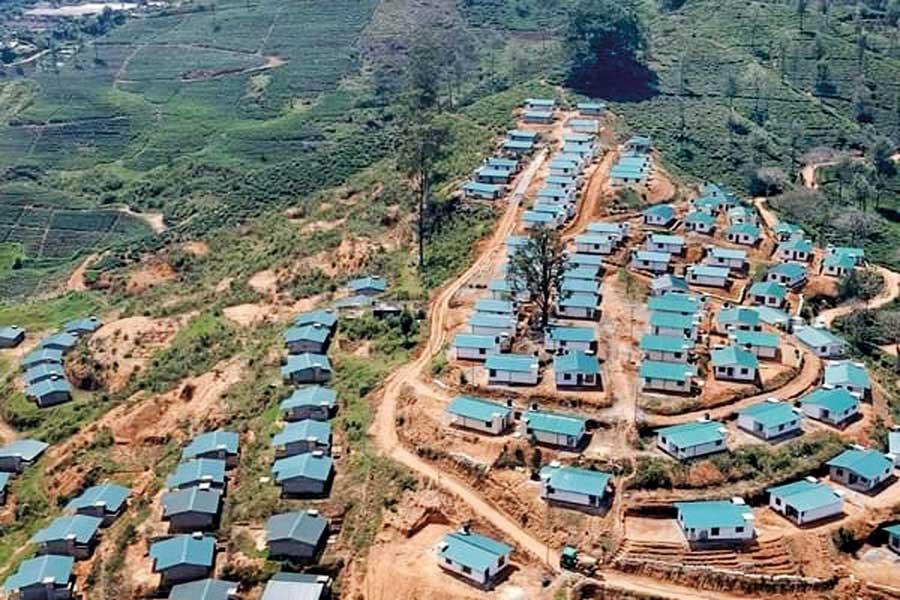
Since 2010, the Indian Government and Sri Lanka have cooperated on the Indian Housing Project, a bilateral initiative aimed at improving the living conditions of plantation estate workers. Recognizing the long-standing neglect and poor housing standards in Sri Lanka’s plantation sector, this project has focused on constructing durable, sanitary, and secure homes in plantation areas, especially in the Central Highlands and other key districts. The project has progressed through multiple phases, with the latest – the fourth phase, launched in 2023. This phase plans to build over a thousand new houses for plantation workers, continuing the Indian government’s pledge to enhance welfare in Sri Lanka’s estates. Over 10,000 houses have been planned or completed under this initiative to date, addressing a critical need in communities that have historically faced poverty, overcrowding, and substandard infrastructure.
The project is managed jointly by the governments of India and Sri Lanka, with the Indian High Commission in Colombo coordinating aspects such as funding, construction contracts, and diplomatic oversight. The initiative is a significant symbol of bilateral cooperation and aims to contribute directly to poverty alleviation and social development in marginalized communities.
What is the corruption
The Indian Housing Project was initiated with the goal of improving housing for plantation workers, but from the outset, the process for selecting contractors lacked transparency, with limited public disclosure about tendering procedures.
Contracts were awarded without clear or standardized criteria being made public, creating opportunities for favoritism, nepotism, and kickbacks between officials and contractors.
Early phases of construction faced significant delays, with completion dates pushed back repeatedly, suggesting weak project management and possible deliberate slowdowns for personal gain.
Budgets for various phases were exceeded, sometimes substantially, without clear justification or public explanation, raising red flags about misuse or misallocation of funds.
Reports and complaints emerged about the use of substandard construction materials, such as poor-quality bricks or cement, and inadequate workmanship, compromising the safety and longevity of the houses.
Beneficiary plantation workers and their communities were largely excluded from participating in oversight or monitoring activities, which limited checks on project implementation and allowed irregularities to persist.
Formal independent oversight or audit mechanisms were either weak, poorly enforced, or absent altogether, reducing external accountability and enabling corrupt practices to go unnoticed or unpunished.
Due to weak controls, funds earmarked for housing construction risked diversion, misappropriation, or being siphoned off by intermediaries involved in the project.
Transparency was further undermined by the lack of publicly accessible financial reports, project updates, or progress dashboards, preventing citizens and civil society from effectively tracking use of resources and project outcomes.
Potential conflicts of interest arose where officials responsible for project supervision had close ties with contractors, undermining impartiality and increasing the risk of corrupt decision-making.
Grievance redress mechanisms were insufficient or non-functional, leaving beneficiaries without clear channels to report poor workmanship, delays, or suspected corruption.
Monetary value involved
Not specified in the source document.
What has been done
Publish all tender documents, contractor selection criteria, and contract awards online to ensure full transparency in procurement processes.
Form independent oversight committees including beneficiaries, civil society representatives, and technical experts to regularly monitor construction quality and timelines.
Create a publicly accessible digital platform that tracks project progress, financial disbursements, and allows submission of complaints or grievances.
Establish clear, accessible grievance redress mechanisms enabling plantation workers to report delays, poor workmanship, or corruption safely and anonymously.
Conduct frequent independent financial and technical audits, with results published openly to build public trust and deter misconduct.
Involve plantation communities in planning, monitoring, and decision-making to enhance accountability and foster ownership of the project.
Strengthen collaboration between Sri Lankan and Indian authorities through joint oversight forums to promptly address implementation issues and corruption risks.
Train project staff, local officials, and contractors on anti-corruption best practices, ethical procurement, and good governance principles.
Encourage active civil society and media engagement to monitor progress, expose irregularities, and maintain pressure for transparency.
Enforce strict conflict of interest policies for officials and contractors to prevent favoritism and ensure impartial project management.
What can be done
Ensure full transparency in contractor selection by publicly sharing tender documents, evaluation criteria, and contract awards.
Establish independent monitoring committees that include plantation workers, civil society representatives, and technical experts to oversee construction quality and timelines.
Develop a publicly accessible digital portal to track project progress, budgets, fund disbursements, and complaints in real time.
Strengthen grievance redress mechanisms to allow beneficiaries to safely report poor workmanship, delays, or suspected corruption without fear of retaliation.
Conduct regular independent financial and technical audits of the project and make audit findings publicly available.
Promote community participation in planning and monitoring to increase accountability and build trust among beneficiaries.
Facilitate joint oversight forums between Sri Lankan and Indian authorities to review project implementation and address challenges collaboratively.
Provide training and capacity-building for local officials, contractors, and community monitors on good governance and anti-corruption best practices.
Encourage civil society and media to maintain active watchdog roles by reporting on project progress and exposing irregularities.
Implement strict conflict of interest policies to ensure impartiality of officials involved in project management and oversight.
Links
High Commission of India in Colombo – Indian Housing Project Overview: Provides comprehensive details on the project’s phases, objectives, and achievements ; https://www.hcicolombo.gov.in/page/indian-housing-project/
UN-Habitat – Indian Housing Project in Sri Lanka: Offers insights into the project’s implementation in Sri Lanka’s Central and Uva Provinces, focusing on community involvement and sustainable practices ; https://unhabitat.net/projects/sri_lanka/detail17_en.html
Tamil Guardian – CWC Accused of Corruption in Housing Allocation: Reports on allegations against the Ceylon Workers Congress for favoring trade union members in the allocation of houses.
https://www.tamilguardian.com/content/cwc-accused-corruption-when-allocating-homes-indian-housing-project
The Morning – Concerns Over Phase IV Implementation: Discusses emerging concerns regarding the recently commissioned Indian Housing Project Phase IV. https://www.themorning.lk/articles/k4Tw1L5NuBVrF6SKMeGx
Other Links:
India begins construction of 1,300 houses for Sri Lanka plantation workers
https://www.adaderana.lk/news.php?nid=97383
India to construct 10,000 houses in Sri Lanka plantation areas